
Category

Refresh News

What is Endometriosis?

By Refresh News

What is Endometriosis?

Endometriosis is a persistent inflammatory medical condition characterized by the endometrial-like tissue growing outside the uterus. These cells are often found in the pelvis (on the thin pelvic lining called the peritoneum), including the ovaries, pelvic ligaments, bowel & the bladder, & they have also been located as far away as the lungs & the brain.

Symptoms can emerge as early as eight years of age & the cause is now generally considered multi-factorial with a strong genetic link, possibly also how genetics behave with other influences (perhaps by environmental factors for example).

In Aotearoa/New Zealand, it affects approximately 1 in 10 women & individuals presumed female at birth in their reproductive years (In Australia 1 in 7) & may take 7-8 years to reach a formal diagnosis. It has been reported that endometriosis patients can be disbelieved or dismissed by their healthcare professionals which in part is due to long diagnostic delays.

Symptoms associated with endometriosis are wide ranging & may include:-

♀️Fatigue
♀️Pain in the pelvic region, lower back or legs
♀️Pain with bowel movements
♀️Heavy bleeding (menorrhagia) or irregular bleeding
♀️Having trouble holding on when you have a full bladder, or having to go frequently
♀️Pain during or after sex (dyspareunia)
♀️Pain when you urinate (dysuria)
♀️Pain on or around ovulation (dysmenorrhea)
♀️Pain that stops you on or around your period
♀️Abdominal bloating, digestive issues
♀️Some women may experience no symptoms.

Symptoms can have significant consequences on various domains of life, including mental health, social & intimate relationships, as well as functioning at school or work. Due to the variation in disease outcomes, there is no one-size-fits-all management approach, & successful management needs to be tailored according to the individual’s presentation & needs.

Endometriosis is more common than diabetes (1 in 20) & cancer (1 in 50) & is one of the most prevalent yet under recognised conditions.

Severity of symptoms may not reflect the extent of the disease, which can cause internal changes without noticeable pain. Sometimes endometriosis can be diagnosed incidentally during medical intervention for other matters.

How is endometriosis treated?

There are three types of treatments for endometriosis:

1. Medical treatments – Includes medications to manage symptoms & hormone therapies.

2. Surgical treatments – Involves procedures such as laparoscopy to remove endometriotic tissue.

3. Allied treatments – research shows multimodal physiotherapy is superior for pain relief & overall well-being than any other modality (e.g. acupuncture).

(Starzec-Proserpio et al, 2024).

How is it diagnosed?

The only definitive way to diagnose endometriosis is through laparoscopy with a biopsy (tissue sample). The tissue can form nodules & plaques which can be visualised here.

There is currently no cure for endometriosis.

Fertility

Endometriosis may impact fertility by causing inflammatory changes within the pelvis making the environment too hostile for the egg, sperm & embryo & thus impact implantation of the embyro.

Research suggests ≈30% undergoing IVF have endometriosis & ≈50% of those living with endometriosis are challenged by fertility.

Early diagnosis & treatment can help stop disease progression & worsening fertility prospects.

Work Impact

Research shows :-

♀️50% of endometriosis sufferers report lack of flexibility in the workplace was a significant problem.

♀️70% of women have to take unpaid time off to manage their endometriosis symptoms.

♀️1 in 3 have been passed over for promotion.

♀️1 in 6 have lost their employment due to their endometriosis.

♀️Many women are fearful of raising the issue in the workplace.

♀️1 in 10 individuals with endometriosis leaving employment due to the overwhelming demands of managing their condition.

Impact of COVID-19 Pandemic

Workplace changes built on flexibility positively impacted those with endometriosis.

79% reported management of their endometriosis symptoms easier.

60% said they were more productive with Work from Home options.

Other tips to improve endometriosis management in the workplace:

  • Introduction of 20-minute rest periods
  • Access to healthcare benefit
  • Access to healthcare services such as counselling, mindfulness or assisted exercise
  • Access to physical aids such as ergonomic chairs, heat packs, props.

Some helpful patient reported outcome measures to fill out are:- 

  1. The Endometriosis Impact Questionnaire (EIQ) a comprehensive self-report tool designed to assess the long-term effects of endometriosis on various aspects of women’s lives. It evaluates physical, psychological, social, sexual, occupational, educational & lifestyle impacts.
    View EIQ Tool Here
  2. Pelvic Pain Impact Questionnaire (PPIQ)
    View PPIQ Questionnaire Here

Back Pain – Unhelpful Beliefs

By Refresh News

Back Pain - Unhelpful Beliefs

Here are some unhelpful beliefs when it comes to back pain – how many of these resonate?

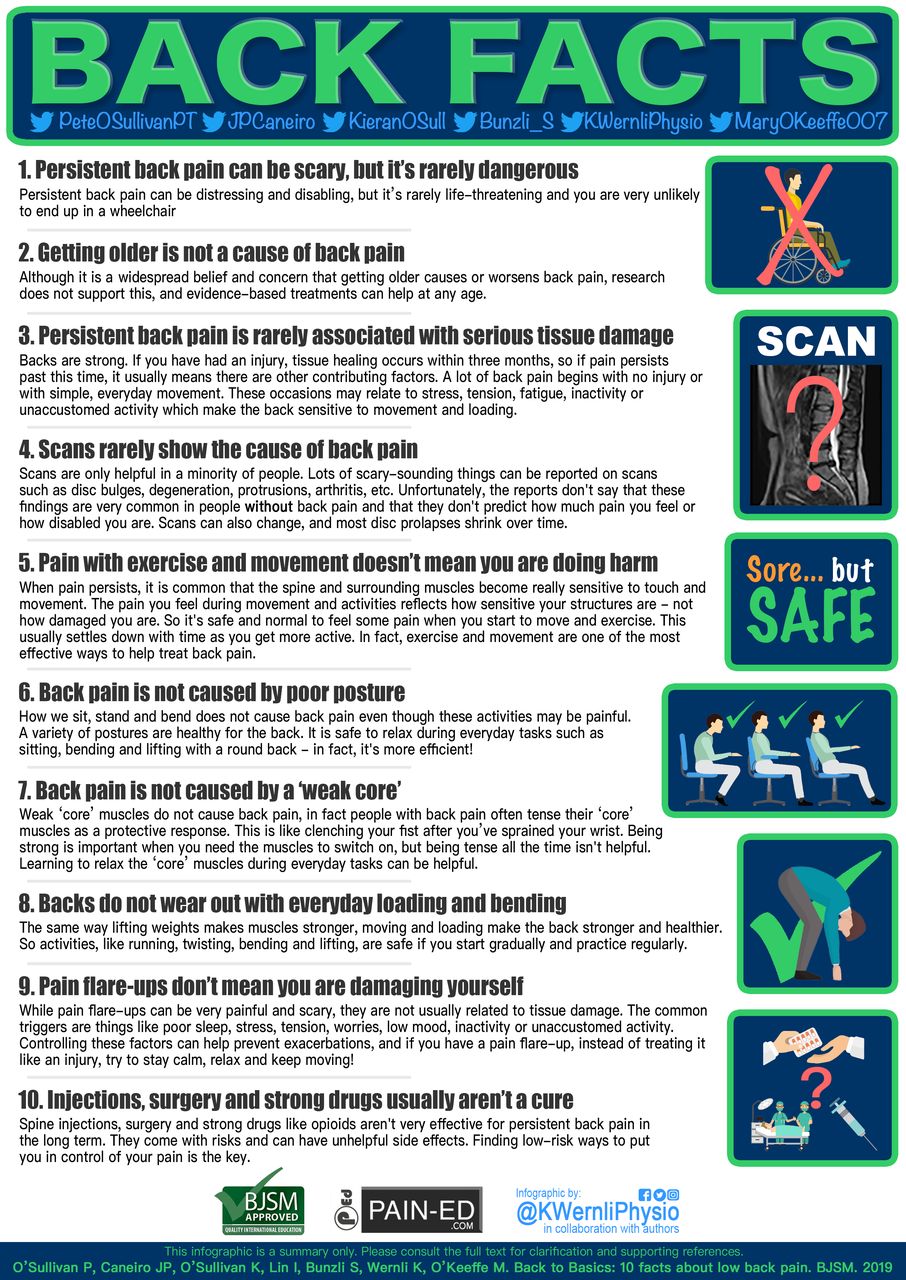
1. Unhelpful belief: Back pain is caused by loose joints, or the spine being ‘out’ of place. Back pain means my back is damaged…
Fact: Backs are very strong, robust, mobile structures & they don’t go ‘out’ of place.

2. Unhelpful belief: Disc degeneration & disc bulges on a scan are serious signs of pathology. Back pain is just a physical, structural problem…
Fact: Back pain is rarely associated with serious tissue damage or pathology. When back pain is associated with tissue damage, healing typically occurs within 6-8 weeks. Findings on a scan such as disc degeneration & disc bulges are common in young people without back pain.

3. Unhelpful belief: Back pain needs to be rested & protected. It is dangerous to exercise, bend or lift with back pain..
Fact: Back pain is closely related to levels of muscle tension, poor sleep, mood, stress or worry. Good sleep, healthy diet, relaxed movement & exercise helps back pain. Backs get healthier & stronger with graduated movement & exercise.

4. Unhelpful belief: You need to watch your posture with back pain…
Fact: A range of postures are safe for the back. Being too sedentary isn’t good for back pain. Keep changing your postures if you have to sit for a while. Remember – your best posture is your next posture.

5. Unhelpful belief: Its not safe to carry a back-pack…
Fact: There is no evidence to suggest that wearing a backpack is unsafe for young people.

6. Unhelpful belief: Ongoing back pain means the spine is becoming more damaged…
Fact: Ongoing back pain is related to hyper-sensitivity of the spine’s structures to load & movement. This is related to many factors but is rarely linked to tissue damage.

7. Unhelpful belief: There is nothing you can do for back pain…
Fact: Back pain can be effectively managed with the right support. Back pain is rarely associated with serious damage or pathology & can be effectively managed with the right support. It helps a lot to be proactive & active.

8. Unhelpful belief: Back pain will get worse with time …
Fact: With the right care, back pain does not get worse over time

9. Unhelpful belief: A back pain flare-up means I have injured my back
Fact: Pain flare-ups are common and are usually caused by factors such as inactivity, stress and low mood.

10. Unhelpful belief: Scoliosis is a cause of back pain
Fact: While people with scoliosis may experience back pain, they are at no greater risk of back pain than those without scoliosis.

Working with a health care practitioner to coach you through this process can help you regain full confidence, mobility, a& functional capacity, especially if you feel tense, fearful & unsure about what to do.

Low Back Pain Recommended Care – including 5 questions to ask your medical practitioner…

Should I get a scan?

Scans (x-rays or other imaging) are not recommended for most young people with back pain. The exception is when ‘specific’ pathology is suspected, for example when there is:

    1. A traumatic injury, such as when a fracture is suspected
    2. A fever
    3. Progressive loss of sensation, power and/or bowel/bladder function
    4. Progressive weight loss and feeling unwell

Scans – what to know

Research shows that up to 30% of 16-year-olds and 45% of 21-year-olds with NO back pain show signs of disc degeneration and disc bulges. These findings occur normally and are not indicative of serious pathology.
These findings can sound scary and can lead a person to start to worry about their backs in an unhelpful way and over-protect movements and activities. Checking out our pain management modules, helps you to find ways to safely progress towards recovery from back pain.

The Musculoskeletal Syndrome Of Menopause

By Refresh News

The Musculoskeletal Syndrome Of Menopause

Vonda Wright’s article on the musculoskeletal syndrome of menopause, published in Climacteric in 2024, highlights the often overlooked impact of menopause on the musculoskeletal system. The article introduces the term “musculoskeletal syndrome of menopause” to describe a collection of symptoms caused by declining oestrogen levels during menopause (I do wish she might have used a slightly more positive word than ‘syndrome’…). These symptoms include joint pain (arthralgia), muscle mass loss (sarcopenia), bone density reduction (osteopenia/osteoporosis) & progression of osteoarthritis.

As a pelvic & musculoskeletal physiotherapist, this article truly resonates with me because it aligns with what I have been hearing from women for years.

Many of my patients describe the very symptoms discussed—such as joint pain, muscle loss, an increase in tendon pain/tendinopathies & bone density concerns—which often coincide with the hormonal shifts of menopause. This validates the lived experiences of so many women I’ve worked with & emphasizes the importance of proactive musculoskeletal care during this transition.

Key points from the article include:
1. Arthralgia (Joint Pain): Many women experience joint pain, which is strongly tied to oestrogen fluctuations during menopause.

2. Loss of Muscle Mass: Estrogen is crucial for maintaining muscle mass. Its decline leads to sarcopenia (loss of muscle mass & strength), making menopausal women more susceptible to fatigue, reduced mobility & injury.

3. Bone Density Reduction: This happens after menopause which increases the risk of osteoporosis & fractures. Oestrogen plays a pivotal role in bone health & its depletion accelerates bone loss.

4. Progression of Osteoarthritis: Menopause often exacerbates existing osteoarthritis or initiates its development, with oestrogen loss contributing to cartilage degeneration, joint stiffness & pain.

5. Increased Inflammation & Chronic Pain: oestrogen levels result in heightened inflammation throughout the body, which can exacerbate both musculoskeletal pain (tendinopathies) & conditions like osteoarthritis, even when no significant joint damage is present.

The article calls for increased awareness among clinicians & patients about these effects, emphasising early diagnosis & lifestyle interventions to prevent long-term disabilities associated with the menopause transition.

It’s not all bad news…with the right support & a proactive approach, quality of life can vastly improve. Tailored guidance on strength training, nutrition & managing inflammation can make a significant difference in reducing symptoms & helping women stay active & healthy through the menopause transition.

For more details, you can access the full article

https://read.qxmd.com/read/39077777/the-musculoskeletal-syndrome-of-menopause)